
Endodontics in Philadelphia, PA
When dental pain strikes, it can be difficult to concentrate on anything else. Whether you’re dealing with a persistent ache, sensitivity to hot or cold beverages, or swelling around a tooth, the caring endodontists at Center City Emergency Dentist in Philadelphia, PA, are here to relieve your discomfort and restore your dental health.
We offer comprehensive endodontic treatments designed to eliminate infection, save your natural teeth, and help you smile with confidence again. Contact us today to book a same-day or next-day appointment!
What Is Endodontics?
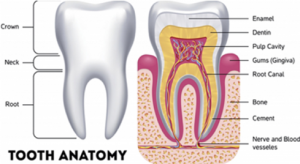
Endodontics is a specialized branch of dentistry that focuses on diagnosing and treating problems that affect the inside of the tooth, such as the pulp and surrounding tissues. The dental pulp contains nerves, blood vessels, and connective tissue that helped the tooth develop. If this pulp becomes infected or inflamed due to deep decay, cracks, or trauma, it can lead to severe pain and even tooth loss if left untreated.
If you suspect issues with your tooth’s pulp, you will be treated by an endodontist, who is a dental specialist who has completed an additional two years (or more) of advanced training. They work to remove infection, alleviate pain, and maintain the natural beauty of your smile without having to resort to tooth extraction.
At Center City Emergency Dentist, our skilled team of endodontic professionals provides both emergency and non-emergency care in Philadelphia to help you maintain a healthy smile for years to come.
Root Canal Treatment (Endodontic Therapy)
When the root of your tooth is infected, or you’re experiencing a tooth abscess, you may require a root canal in order to save that tooth!
In the field of endodontics, root canals, also known as endodontic therapy, are primarily practiced as an alternative treatment and means of saving the tooth rather than extracting it. Root canals are also performed when a tooth is so cracked or damaged that infection is unavoidable.
What Can You Expect From Endodontic Therapy (a Root Canal Treatment)?
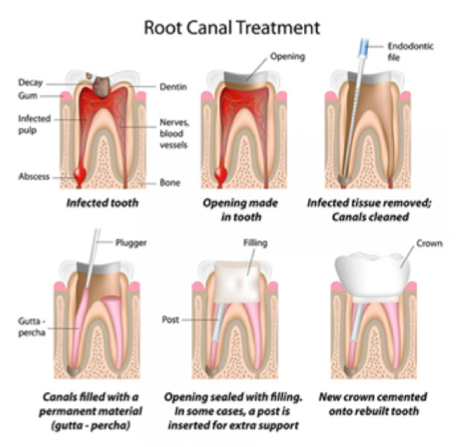
Endodontic treatment of a tooth abscess often entails a couple of visits to our office, located in Center City, Philadelphia, to complete the following steps:
- X-Rays: Your mouth will be X-rayed after the initial inspection so our endodontist can have an accurate understanding of exactly what needs to be done.
- Anesthetic: A local anesthetic will be applied to your abscessed tooth, your gums, and your jaw. This prevents you from feeling pain during the procedure.
- Dental Dam: A dental dam is placed over the numbed area to isolate your infected tooth and keep it saliva-free as our endodontist works.
- Pulp Cleaning: Our endodontist will then make a small opening in your affected tooth crown, allowing them to use instruments to clean the infected pulp from your tooth, roots, and pulp chamber.
- Shaping & Filling: The entire area will then be thoroughly cleaned and shaped before the canal is filled with gutta-percha, a natural latex. In most cases, our endodontist will give you a temporary filling during your healing process.
- Crown Placement: You will need to return after a few weeks to have a crown placed on your tooth or have another form of restorative covering. This will complete the root canal treatment and revive your tooth to its full function once again.
Our ability to salvage diseased and infected teeth has made CCED a reputable and trustworthy cosmetic dentistry practice in Philadelphia. When you are suffering from tooth pain or feel insecure about your smile, give CCED a call right away. We will treat your tooth and restore your oral health so you can smile with confidence once again!
Symptoms of a Tooth Infection
Whether it’s due to the prolonged decay of a large cavity or has resulted from a recent injury, patients who undergo emergency root canals often experience a wide variety of signs and symptoms that directly relate to an infection of the tooth’s root.
Below we’ve listed a few of the most common indicators of an infected tooth:
- Acute tooth pain
- Pulsing or throbbing sensations in the tooth or jaw
- Inflammation (redness and puffiness) of the gums
- Darkening or discoloration of the tooth
- A pimple on the gums
- Prolonged sensitivity
- Fever
- Swelling of the neck or face
When the root of your tooth becomes infected by harmful bacteria, it’s only a matter of time before more serious health complications arise. This is why it’s important to take immediate action, not only to provide pain relief but to ensure your overall health isn’t further jeopardized and to avoid the need for emergency dental care.
Receive Endodontic Procedures in a Comforting and Relaxing Environment
We understand that the thought of a root canal or other endodontic procedure can make some patients nervous. That’s why our team at Center City Emergency Dentist is dedicated to providing care in a calm and stress-free setting.
From the moment you walk into our Philadelphia office, you’ll be greeted by friendly faces and a team that truly cares about your comfort. We use gentle techniques, modern equipment, and local anesthesia to make your experience as smooth and pain-free as possible. For patients who experience dental anxiety, we also offer sedation options to help you feel completely at ease throughout your visit.
What Else Do We Do?
Apart from an endodontic procedure, CCED offers a wide array of dental treatments to ensure comprehensive care under one roof. This includes:
- Restorative Dentistry: From fillings and crowns to bridges and implants.
- Cosmetic Dentistry: Including veneers, whitening, and alignment corrections.
- Periodontics: Specializing in the prevention, diagnosis, and treatment of periodontal disease.
- Oral Surgery: Such as wisdom tooth extractions and dental implants.
Every service we provide, from tooth extraction to the most intricate endodontic surgery, is performed using the latest in dental technology and methods taught in dental school. Receive the best care possible without worry with Center City Emergency Dentist.
Call an Endodontist in Philadelphia Today for Your Toothache
Toothaches and sensitivity can affect every aspect of your life, from eating and sleeping to focusing at work. If you’re tired of feeling discomfort, our endodontists at Center City Emergency Dentist are here to provide fast and effective relief. Using modern technology and years of specialized experience, we’ll diagnose the source of your pain and deliver the treatment you need to restore your smile.
Call today to schedule your appointment! We’ll get to the bottom of your dental discomfort in no time.
Endodontic FAQs
Why would I need a root canal treatment?
Root canal therapy becomes necessary when the dental pulp becomes inflamed or infected. This can happen for several reasons:
- Deep Tooth Decay: A cavity that is left untreated can eat its way through the enamel and dentin, allowing bacteria to invade the pulp chamber.
- Cracks or Chips: A fracture in the tooth, even a small one, can create a direct pathway for bacteria to reach the pulp.
- Repeated Dental Procedures: A tooth that has undergone multiple fillings or other restorations can sometimes suffer pulp damage.
- Trauma: A sudden blow to the tooth (from a sports injury or accident) can damage the pulp, even if there is no visible chip or crack.
When the pulp is infected, bacteria multiply within the pulp chamber. This can lead to a painful infection or an abscess, which is a pus-filled pocket that forms at the end of the tooth’s root. This is what causes the symptoms most people associate with a toothache: throbbing pain, severe sensitivity, swelling, and a bad taste in the mouth.
What should I do in an endodontic emergency?
If you’re experiencing severe tooth pain or swelling, contact Center City Emergency Dentist right away. We’re open seven days a week and can often accommodate same-day appointments.
While waiting to be seen, avoid chewing on the affected side of your mouth and take over-the-counter pain relief as needed. If you have facial swelling, a cold compress on the outside of your cheek can help.
Are root canals painful?
No. This is the most common myth in dentistry. The procedure itself is performed under local anesthesia, and you will not feel any pain. The intense pain people associate with root canals is actually the pain from the infection before treatment. The root canal procedure removes this pain.
What is recovery like after a root canal?
Your tooth and the surrounding gums may feel a little tender or sore for a few days as the area heals. This is easily managed with over-the-counter pain medication. Most patients return to work or their normal activities the very next day.
Why do I need a crown after a root canal?
After the pulp is removed, a crown is used to cover and protect the tooth. This restores its full strength and prevents it from cracking or breaking.