Whiter teeth are a major goal for some, and you may have come across a number of DIY methods. The big question is: does DIY teeth whitening work? In some cases, the answer is yes, but many will damage your teeth.
Oil Pulling
Oil pulling is often touted as a cure for a wide range of conditions and diseases, so it’s perhaps inevitable that it would become linked with teeth whitening. There is some evidence that oil pulling can help with general oral health, but this is mostly due to a reduction of bacteria, plaque sores, and gingival sores.
Unfortunately, there isn’t any evidence linking it to actual teeth whitening.
Baking Soda
Baking soda is a constituent of many popular kinds of toothpaste, so a large number of people believe that pure baking soda would be even better. There is some good evidence that toothpaste containing small amounts of baking soda does superficially work to whiten teeth — it’s a mild abrasive, and it does seem to reduce plaque.
However, baking soda simply helps clean your teeth by removing plaque and other debris. There’s no good evidence that it actually does anything to whiten them.
Adding Mild Natural Acids
When searching for DIY teeth whitening that works, you may find links to recipes that involve acidic fruits or apple cider vinegar. Acidic fruits are often used with baking soda, including oranges, lemons, and strawberries. This is so that it has a nice taste.
The baking soda may help, as previously stated, even if it’s only superficial. However, the acid in the fruits applied to the teeth has a decidedly negative effect — they weaken tooth enamel. It’s best to stay far away from this method of natural teeth whitening unless you want to cause even more damage to your teeth.
Turmeric Combinations
Turmeric is useful and can certainly be good as part of a diet. However, turmeric is better known for staining everything yellow rather than for its cleaning properties. By all means, incorporate more turmeric into your diet. But it won’t make your teeth white.
Adding Peroxide to Baking Soda
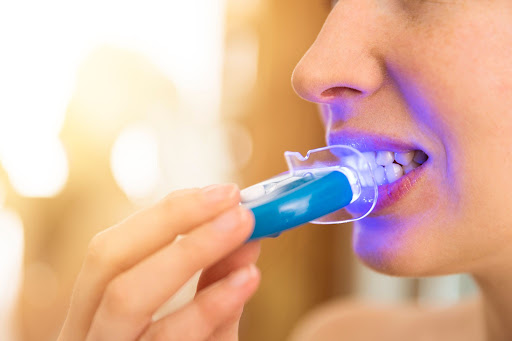
This method attempts to replicate what’s in many over-the-counter teeth whitening kits, and again, there is some evidence that it works. Peroxide is a bleaching agent, so if applied properly, it can lighten your teeth.
The key phrase here, however, is “applied properly.” Many recommend a mouthguard filled with hydrogen peroxide and baking soda, or they may just use straight hydrogen peroxide. However, it’s difficult to stay below the safe level of hydrogen peroxide (which is just 3.6%), and if the solution touches your gums, it can blister and burn the gumline.
What About Over-the-Counter Teeth Whitening Kits?
OTC tooth whitening kits generally contain carbamide peroxide, although some contain hydrogen peroxide at very low concentrations. Typically, to get a suitable amount of teeth whitening, you need around 10% carbamide peroxide or 3% hydrogen peroxide. Some teeth whitening products forcing significantly below that.
With appropriate use and a properly fitted dental tray, these products can lighten your teeth somewhat. In order for these DIY teeth whitening products to work, you need to consider how the product will stay in your teeth and whether the tray is fitted to your mouth correctly.
Ultimately, a dentist is the best option when you are looking to whiten your teeth. Center City Emergency Dentist offers cosmetic dentistry as well as general dental care, both of which can help brighten your pearly whites much better than DIY teeth whitening solutions.
We are also a 24-hour emergency dentists office offering after-hours dental care in Philadelphia and the surrounding areas. Contact us with any questions you have today!